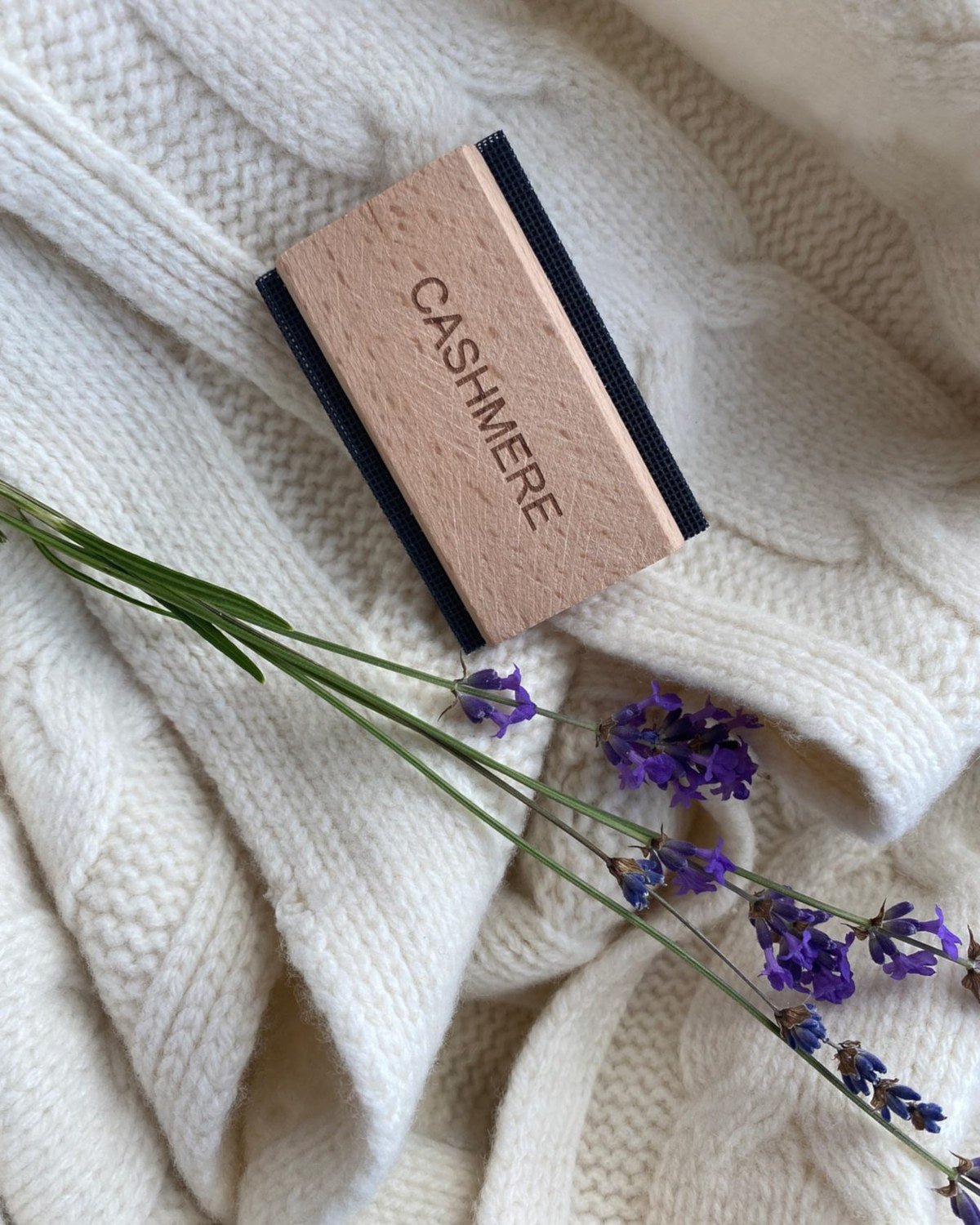
How to Stop Cashmere Pilling, and Fix It When It Happens
Few things worry cashmere owners more than pilling, those tiny bobbles that can appear on a favourite jumper or scarf after the first few wears. The good news is that pilling is completely natural, it is not a sign of poor quality, and it is easy to manage. In fact, gently removing pills is part of looking after cashmere well, and a few simple habits will keep your knitwear looking smooth and beautiful for years.
What is pilling, and why does cashmere pill?
Pilling happens when shorter fibres work loose from the surface of a knit and, through friction, tangle together into small balls. It appears most where fabric rubs: under the arms, at the sides where a bag sits, along seatbelts, or where a scarf meets a coat collar. New cashmere often pills a little more at first, because loose surface fibres from knitting are still settling. After the first few wears and a gentle de-pilling, this slows right down, and fine, long staple cashmere pills far less over its life than cheaper, shorter fibre knits.

Preventing pilling before it starts
You cannot stop pilling entirely, but you can slow it dramatically. The single most helpful habit is rest: try not to wear the same cashmere piece on consecutive days. Giving knitwear a day or two to rest lets the fibres relax back into place, which reduces friction damage and helps the garment keep its shape.
Be mindful of rubbing points too. Alternate the shoulder you carry a bag on, take care with rough coat linings and jewellery, and avoid wearing your softest knits under abrasive straps for long periods. When you wash cashmere, follow gentle hand washing guidance, turn pieces inside out, and never wring or twist them. Store knitwear folded rather than hung, in a clean, breathable bag, so the surface is protected from friction and moths while it rests.
How to fix pilling with a cashmere comb
When bobbles do appear, a cashmere comb is the right tool for the job. Lay the garment flat on a firm surface and, holding the fabric gently taut, glide the comb in one direction in short, light strokes. The pills collect on the comb and lift away. Work patiently rather than pressing hard, and empty the comb as you go. Avoid battery shavers on fine knits unless they are designed for delicate fibres, and never pull bobbles off by hand, as this draws out more loose fibre and can thin the fabric.

After de-pilling, you will notice the surface looks renewed, almost like new. Many of our customers build this into a small seasonal ritual: wash, rest, comb and store, and their cashmere rewards them by looking better for longer.
When should you de-pill, and how often?
The best moment is early: check a new piece after its first few wears, when loose surface fibres are most likely to appear, and give it a light comb before you put it away. After that, most cashmere needs attention only a few times a season, or whenever you notice bobbles gathering at a friction point. Little and often is the secret. A two minute tidy keeps the surface smooth, and because you are removing only fibres that have already worked loose, regular gentle combing does not harm the knit.
The right tools for the job
Keeping a comb and gentle care essentials to hand makes all the difference, and takes only a few minutes a few times a season.

Treat pilling as maintenance rather than damage, and your cashmere will stay soft, smooth and smart for many years of wear.